Harness learner interests (Early Childhood)
teaching practiceFor student year
Helps students to
- be more engaged
- be motivated to learn and participate
- increase learning opportunities
Helps teachers to
- engage and motivate learners
- learn about child's strengths
- adapt learning experiences
Summary
Some young children, especially neurodivergent children, may have focused interests and knowledge in one or two specific areas they are intensely interested in. They may be stronger in these areas than in other areas of their development, and they may have more knowledge than their peers in these areas.
Research suggests that harnessing these interests by including them in learning and play materials can:
- motivate children to complete tasks
- make learning more meaningful and
- boost learner engagement.
How this practice works
Watch this video to learn more about how to harness learner interests in the classroom.
Duration: 4:13
Australian Children’s Education and Care Quality Authority (ACECQA) National Quality Standards (NQS) related to this practice
Element 1.1.2: Child centred
Each child’s current knowledge, strengths, ideas, culture, abilities and interests are the foundation of the program
Element 1.2.2: Responsive teaching and scaffolding
Educators respond to children’s ideas and play and extend children’s learning through open-ended questions, interactions and feedback.
Element 1.2.3: Child directed learning
Each child's agency is promoted, enabling them to make choices and decisions that influence events and their world
For further information, see ACEQA’s National Quality Standard page
Early Years Learning Framework (EYLF) outcomes related to this practice
Outcome 4: Children are confident and involved learners
For further information, see ACEQA’s Approved learning frameworks page
Preparing to teach
How to use children’s interests in the learning environment
Know your learners well – observe them, communicate with them and liaise with their parents/carers to identify their focused interests.
After you have identified these areas of focused interest, you can:
- embed their interests into activities and/or routines
- provide individualised learning activities
- monitor changing interests and make suitable adjustments use these interests to motivate them using the Premack principle
The Premack Principle is a positive reinforcement strategy where a preferred activity is offered as a reward for the completion of a less preferred task.
Motivating learners
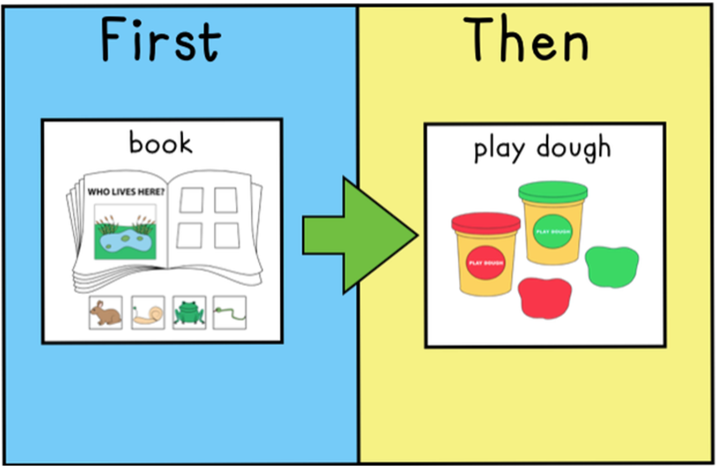
Use a learner’s area of interest to motivate them to complete less-preferred tasks by using the Premack principle. This is where the learner is supported to complete a less-preferred task (e.g. washing hands after toileting) before playing with their focused interest.
Make sure you:
- optimise learning by making it fun
- show the order of activities using photos or other visual supports
- clearly describe/show the child what the expectations are
- reinforce ‘first and then’ (e.g. “First, wash your hands…Then, you can…”)
Example
- Prepare photos or other visual cues of washing hands and your learner’s area of interest, for example play-dough
- Place the visual support next to the hand-washing basin
- Show and tell the child “First, wash your hands for the whole time I sing the ‘Wash your dirty hands’ song. Then, you can play with the play-dough”.
OR
“First we will read a book on the mat, and then you can play with play-dough”
Embedding special interests into the early childhood curriculum
When planning, consider which of the learner’s interests might be appropriately embedded.
Example:
An educator is motivating a child to sit with their peers at story time. As the child has a focused interest in horses, the educator starts and finishes the activity with a book/song about horses. The educator also encourages the child to sit next to their preferred peer and makes the session brief, so it always ends with success.
Adapting individualised tasks
Using a learner’s area of interest does not have to be time-consuming. You can adapt the task to offer choice for the individual learner to link it with their area of interest.
Example:
The child’s individualised goals are to increase daily play with a variety of activities at ECEC and increase interaction with peers. Having observed that the child has an interest in dinosaurs, the educator adds toy dinosaurs to the playdough activity. The child is encouraged to sit with a preferred peer at this new activity and prompts both children to share and interact through turn-taking activities.
It works better if you:
- make the less preferred task fun and engaging
- make sure it’s developmentally appropriate (e.g. the time required for the less preferred task)
- allow enough time for the learner to enjoy and engage with their interest after completing the less-preferred task
- regularly assess and review whether the use of an area of interest is helpful and what further adjustments may be needed next time.
It doesn’t work if:
- a focused interest is used to punish the learner (e.g. taking away access to the focused interest)
- you change expectations partway through using the Premack principle – this is likely to increase anxiety and decrease trust.
- you are inconsistent in your use of the strategy
- you stop using the visual and structured support before the child is demonstrating independence
- you attempt to reduce or eliminate the child’s focussed interest
In the classroom
How do I do it?
Embed learning into daily routines and activities by:
- creating opportunities to incorporate the child’s focussed interest into the ECEC program for all children to support learning, engagement and peer interaction
- talking with parents/carers about how you are working towards the individualised goal to ensure consistency across environments and people
- providing frequent encouragement to support the child’s engagement with less preferred activities
- partnering the child with a preferred peer to play with the activity of focussed interest and less preferred activities
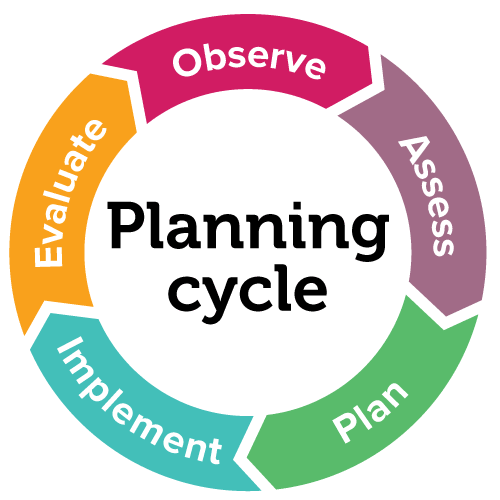
Use the EYLF Planning Cycle to harness children’s interests
- Observe: what the child chooses to play with
- Assess: ask parents/carers about the child’s interest at home and other environments where they live, learn and play
- Plan: how to embed the child’s interests and preferred activities into learning activities to meet the child’s individualised goals
- Implement: your plan of using child interest throughout daily activities and routines
- Evaluate: any changes to the child’s focussed interests and the impact on the child’s learning and interactions and make any adjustments
How will I know if it's working?
- Children’s strengths, interest and preferences are embedded in ECEC learning activities
- Children have opportunities to play with their preferred activity
- Children are extending their interests through exposure to a variety of activities and materials
- Children are learning new knowledge and functional skills
- Educators and parents/carers are communicating about the child’s strengths, interests and preferred activities
Practice toolkit
Set your professional learning goal for:
Harness learner interests (Early Childhood)
Benefits of goal setting
Setting, working towards, and reflecting on goals helps you grow professionally and improve your practice. You can access AITSL learning resources for teachers to learn more about:How to set goals
The Australian Institute for Teaching and School Leadership recommends using the SMART matrix to frame your goal setting.SMART goals refers to goals that are:
- Specific
- Measurable
- Achievable
- Relevant
- Time-phased
Related Practices

Embed opportunities for choice making (Early Childhood)
TEACHING PRACTICE
For student years
Helps students to
- make decisions
- build independence

Learning Cycle